
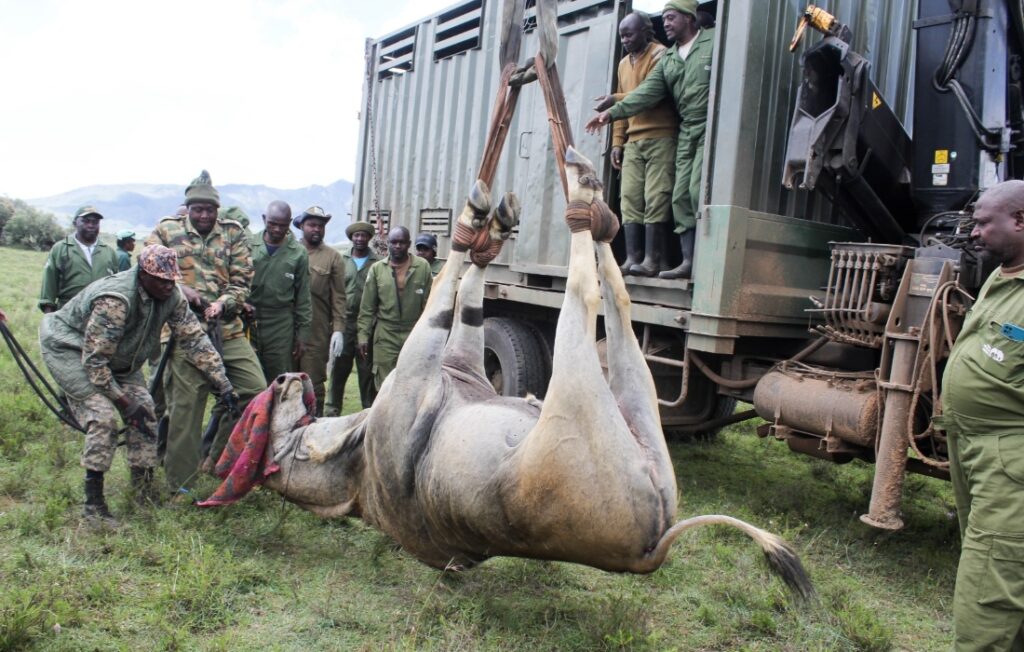
Kenya Wildlife Service has commenced the third phase of its ongoing herbivore relocation exercise from Kedong Ranch in Naivasha, targeting safer and more sustainable habitats.
In a statement released on Friday, April 24, the agency said the latest phase follows two earlier successful operations conducted seven and five months ago, during which over 450 animals were translocated.
According to KWS, the programme continues to record steady progress, with a recent operation seeing the movement of more than 30 animals.
Kenya Wildlife Service launches phase three of Kedong Herbivore relocation. Photo: Courtesy.
The initiative forms part of KWS’s broader conservation strategy aimed at easing pressure on habitats, improving ecosystem balance, and minimizing human-wildlife conflict.
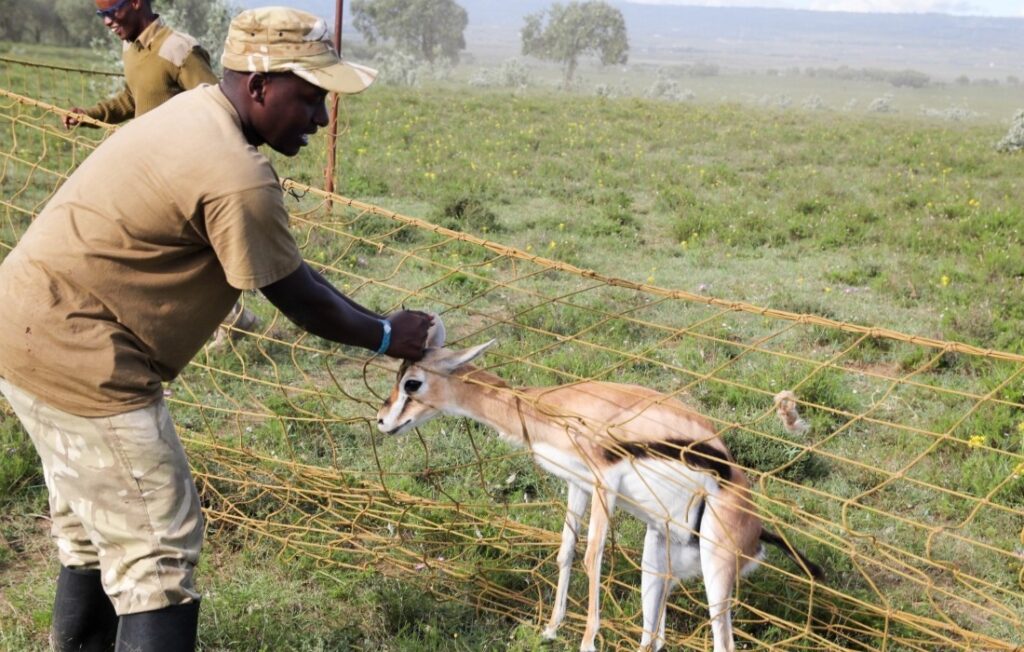
“Kenya Wildlife Service has officially embarked on the third phase of relocating herbivores from Kedong Ranch to safer habitats. This follows two successful operations carried out seven and five months ago, during which more than 450 animals were translocated. In a recent operation, the team moved more than 20 Grant’s gazelles and 10 elands from Kedong Ranch to Solai Sanctuary,” the statement read.
KWS stated that Kedong Ranch in Naivasha, once an important wildlife corridor between Mount Longonot and Hell’s Gate National Park, has significantly lost its ecological function due to fencing, road development, and land subdivision.
The agency went on to note that the shrinking landscape has forced wildlife into smaller, more vulnerable areas where access to food and water is increasingly limited.
KWS added that the ongoing third phase of relocation is aimed at moving around 200 herbivores to safer habitats where they have better chances of survival and long-term ecological stability.
Kenya Wildlife Service went on to state that Kedong Ranch in Naivasha previously served as a key wildlife corridor linking Mount Longonot and Hell’s Gate National Park, but its ecological function has significantly declined over time.
The agency attributed the loss of the corridor to increased fencing, road construction, and rapid land subdivision, which have disrupted natural wildlife movement patterns in the area.
KWS noted that the shrinking habitats have forced wildlife into increasingly limited and fragile spaces, reducing their access to essential resources such as food and water.
The authority further said the ongoing third phase of the relocation programme, targeting about 200 herbivores, is aimed at improving survival prospects by moving the animals to more secure and sustainable habitats.