
The Kenya Meteorological Service Authority (KMSA) has forecast above-average rainfall in 46 counties across the country in November 2026.
In a statement issued on Saturday night, October 31, the authority described November as a crucial month in the October-November-December (OND) short rains season, noting that the rainfall would support agricultural activities, replenish water resources and sustain livelihoods.
KMSA explained that rainfall patterns and intensity during the month would be influenced by large-scale climate drivers, including the Indian Ocean Dipole (IOD), the El Niño–Southern Oscillation (ENSO) and intra-seasonal atmospheric systems.
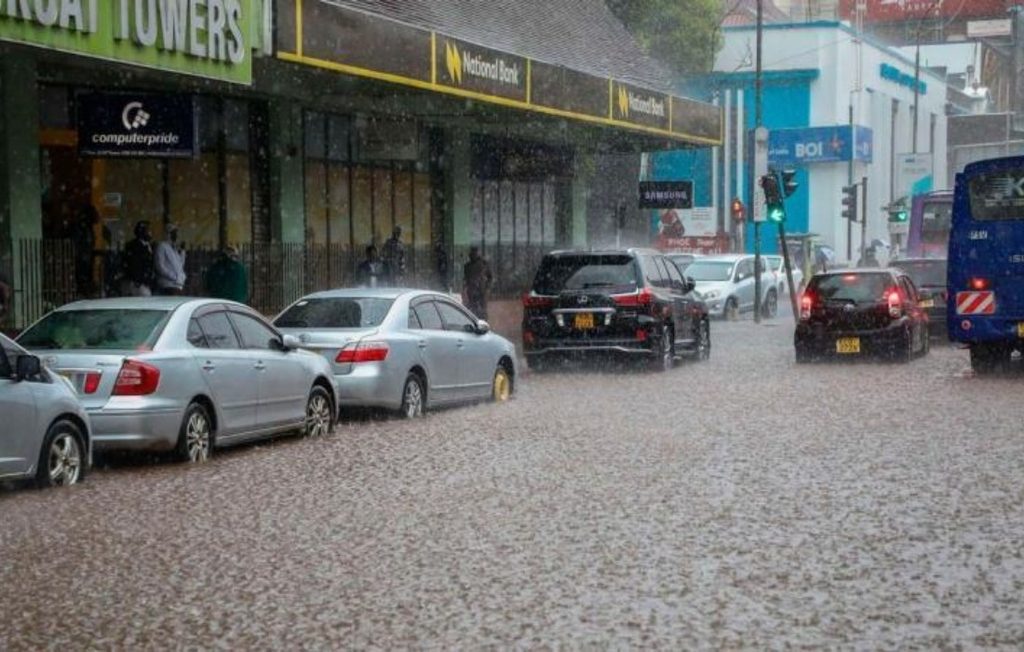
KMSA warns of flood risks as 46 counties brace for heavy rains. Photo: Courtesy.
Counties expected to receive above-average rainfall include Baringo, Bomet, Bungoma, Busia, Elgeyo Marakwet, Embu, Garissa, Homa Bay, Isiolo, Kajiado, Kakamega, Kericho, Kiambu, Kilifi and Kirinyaga.
Others are Kisii, Kisumu, Kitui, Kwale, Laikipia, Lamu, Machakos, Makueni, Mandera, Meru, Migori, Mombasa, Murang’a, Nairobi, Nakuru, Nandi, Narok, Nyamira, Nyandarua, Nyeri, Siaya, Taita Taveta and Tana River.
Tharaka-Nithi, Trans Nzoia, Uasin Gishu, Vihiga and Wajir are also expected to experience above-average rainfall, alongside much of West Pokot, Samburu and Marsabit counties.
Despite the increased rainfall, KMSA projected generally warm conditions across the country throughout November.
The authority indicated that temperatures would differ depending on elevation and geographical location, with the highlands expected to record mean temperatures of between 15°C and 20°C.
Meanwhile, temperatures in arid and semi-arid lowlands are likely to exceed 28°C.
KMSA further cautioned that increased rainfall could create favourable breeding conditions for mosquitoes, potentially raising the risk of malaria transmission.
The authority also warned of possible flash floods, riverine flooding, landslides and infrastructure damage during the month.
Areas considered particularly vulnerable include low-lying coastal regions, flood-prone river basins, urban centres with inadequate drainage systems and steep highland areas susceptible to soil erosion and landslides.
The anticipated hazards could disrupt transport networks, destroy property, affect livelihoods and endanger lives, prompting residents in vulnerable areas to exercise caution.