
President Donald Trump has issued a proclamation introducing new travel restrictions on nationals from several countries, with Tanzania among 15 nations subjected to partial entry limitations over security and immigration compliance concerns.
The restrictions affecting Tanzania are largely attributed to high visa overstay rates, which U.S. authorities say reflect weak compliance with American immigration laws.
Official overstay data shows Tanzania recorded a 8.30 percent overstay rate for B-1/B-2 visas, alongside a 13.97 percent overstay rate for F, M, and J visas, figures that U.S. immigration officials flagged as a concern.
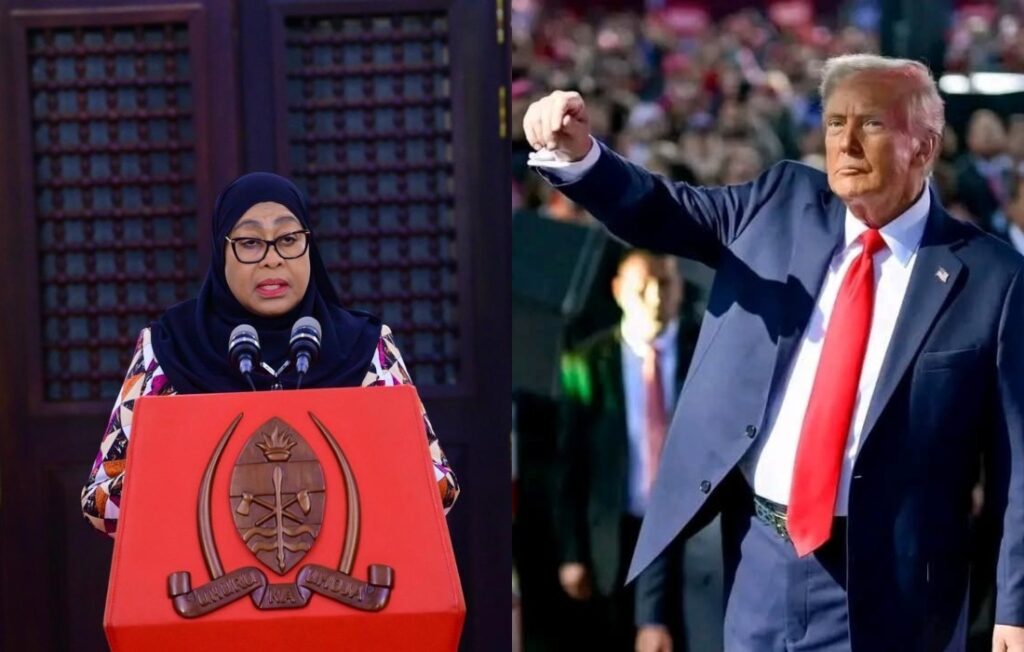
Trump Signs Proclamation Imposing Partial Travel Limits on Tanzania, Others. Photo: Courtesy.
The measures form part of a wider initiative by the Trump administration aimed at addressing what it describes as ongoing gaps in screening, vetting, and information-sharing processes that could pose risks to U.S. national security and public safety.
The proclamation also maintains full travel restrictions and entry limitations on nationals from the original 12 high-risk countries listed under Proclamation 10949.
The original 12 countries Afghanistan, Burma, Chad, the Republic of the Congo, Equatorial Guinea, Eritrea, Haiti, Iran, Libya, Somalia, Sudan, and Yemen remain under strict entry restrictions.
The new proclamation adds five more nations to the full ban list: Burkina Faso, Mali, Niger, South Sudan, and Syria citing serious gaps in vetting and information-sharing protocols.
The new proclamation expands U.S. travel restrictions, imposing full entry limits on holders of Palestinian Authority travel documents, and upgrading Laos and Sierra Leone from partial to full restrictions.
Partial restrictions now cover 19 countries, including Tanzania, Angola, Benin, Nigeria, and Zimbabwe, while Turkmenistan saw its non-immigrant visa ban lifted following improved compliance.
The White House cited issues such as high visa overstay rates, weak vetting, fraudulent documents, lack of information-sharing, criminal activity, and extremist presence as reasons for the expanded measures.
Exceptions apply to lawful permanent residents, existing visa holders, certain visa categories, and case-by-case entries serving U.S. national interests.