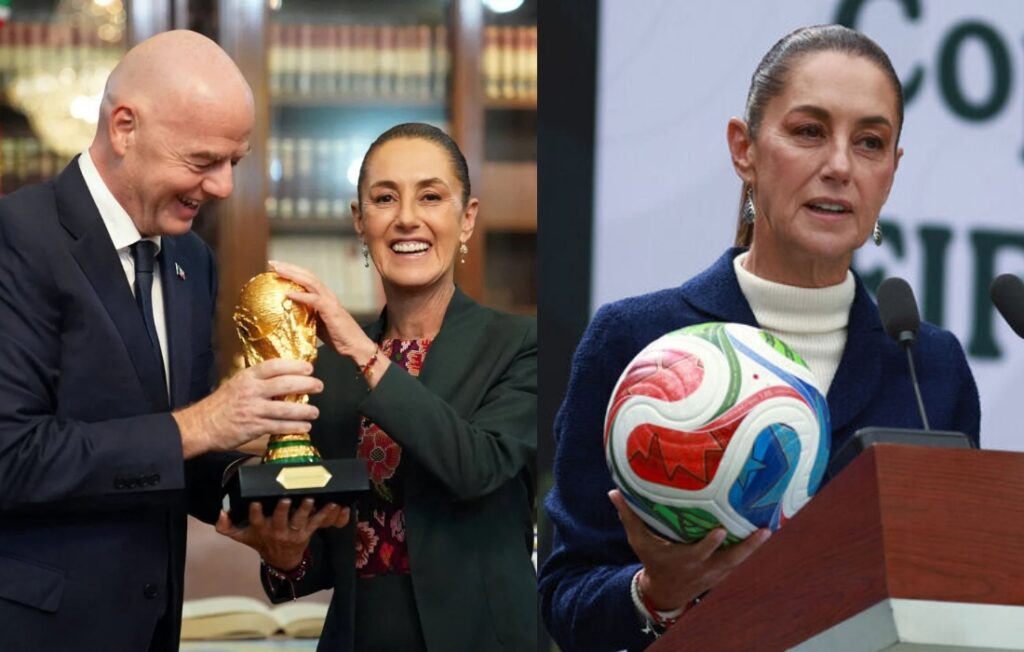
Mexico’s President Claudia Sheinbaum has reassured fans that there is “no risk” for visitors attending the FIFA World Cup later this year.
Her comments follow the death of Nemesio Oseguera Cervantes, widely known as El Mencho, leader of the Jalisco New Generation Cartel, killed in a military operation in Jalisco on February 22.
The killing triggered a wave of retaliatory violence across 20 states, with cartel gunmen blocking roads, torching vehicles, and attacking security forces. At least 25 National Guard officers were killed in the first 24 hours.
Guadalajara and Monterrey, two of Mexico’s host cities, will stage the final FIFA playoff in March featuring Bolivia, Congo DR, Iraq, Jamaica, New Caledonia, and Suriname.
Mexico is set to host 13 of the 104 World Cup matches, including four in Guadalajara, which has already seen violence near Akron Stadium.
FIFA president Gianni Infantino said he was “very reassured” that Guadalajara could host matches, despite the unrest, noting close collaboration with Mexican authorities.
A FIFA spokesperson confirmed the organization is monitoring the situation and remains in contact with federal, state, and local agencies to ensure public safety.
Security experts expect a massive deployment of Mexican forces to stabilize Jalisco and protect international travelers before the tournament begins in June.
Flights to Jalisco were disrupted, with over 200 cancellations or diversions, though limited service has since resumed as authorities regain control.
The United States had placed a $15 million bounty on El Mencho, underscoring his status as one of the world’s most powerful cartel leaders.
Despite the turmoil, Mexico insists the World Cup will proceed as planned, with enhanced security measures designed to protect fans, players, and officials.
The tournament opens on June 11, and Mexico’s role as co-host alongside the United States and Canada remains central to FIFA’s expanded 48-team format.