
Nominated Senator Karen Nyamu has declared that she will become Kenya’s first female president in 2052, outlining a long-term political roadmap that she says begins with Nairobi Senator Edwin Sifuna’s bid for the presidency.
In a statement issued on Wednesday, July 8, Nyamu laid out what she described as her vision for the country’s political future, predicting that Sifuna would first emerge as the Official Opposition Leader after the 2027 General Election before eventually ascending to the presidency.
According to the UDA-nominated senator, Sifuna would finish second in the 2027 presidential election and spend the next five years serving as Opposition Leader, a role she believes would help him build national appeal and strengthen his political credentials.
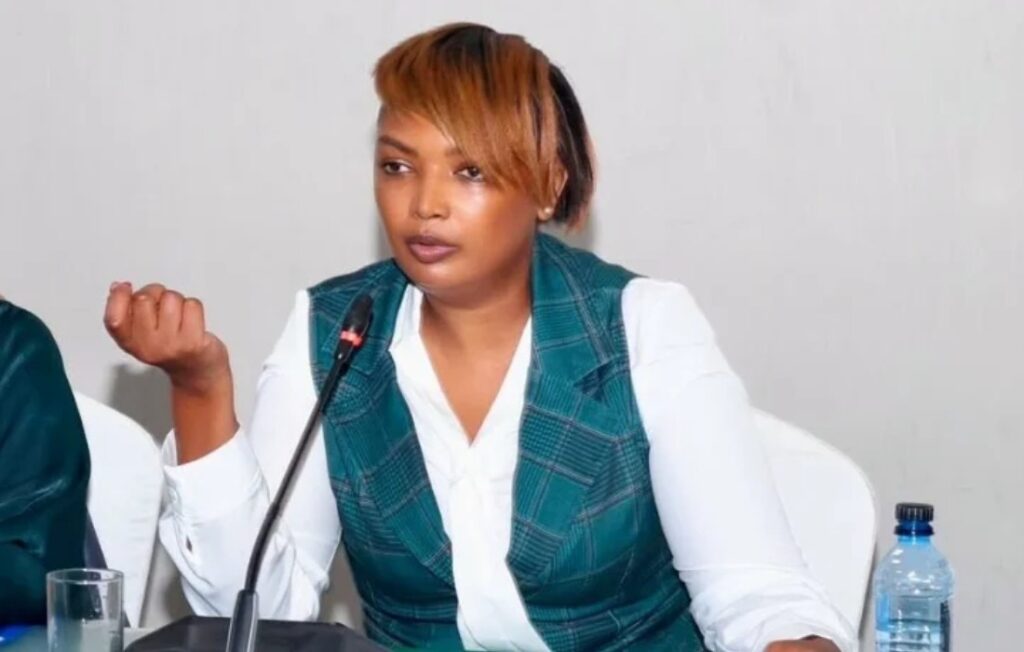
Nominated Senator Karen Nyamu. Photo: Courtesy.
Nyamu further projected that Sifuna would unsuccessfully contest the presidency again in 2032 and 2037 against Deputy President Kithure Kindiki before eventually securing victory in the 2042 General Election.
She argued that the years spent in opposition would prepare Sifuna for national leadership while also giving her sufficient political experience to serve as his running mate.
The senator expressed confidence that the pair would win the 2042 election and lead the country together for two terms, after which Sifuna would hand over power to her at the end of his tenure.
Nyamu said that under the arrangement, she would succeed Sifuna in 2052, making history as Kenya’s first woman president while continuing the development agenda initiated by President William Ruto and later advanced by Kindiki.
The senator also criticised Sifuna, accusing him of lacking the confidence to challenge President Ruto directly for the country’s top seat.
She argued that instead of positioning himself as a presidential contender, the Nairobi senator had chosen to align himself with political figures she claimed had already lost public support.
Nyamu further advised Sifuna to stop focusing on retaining his position as ODM Secretary-General and instead concentrate on building a national political movement capable of attracting support from Kenyans seeking a fresh leadership alternative.