
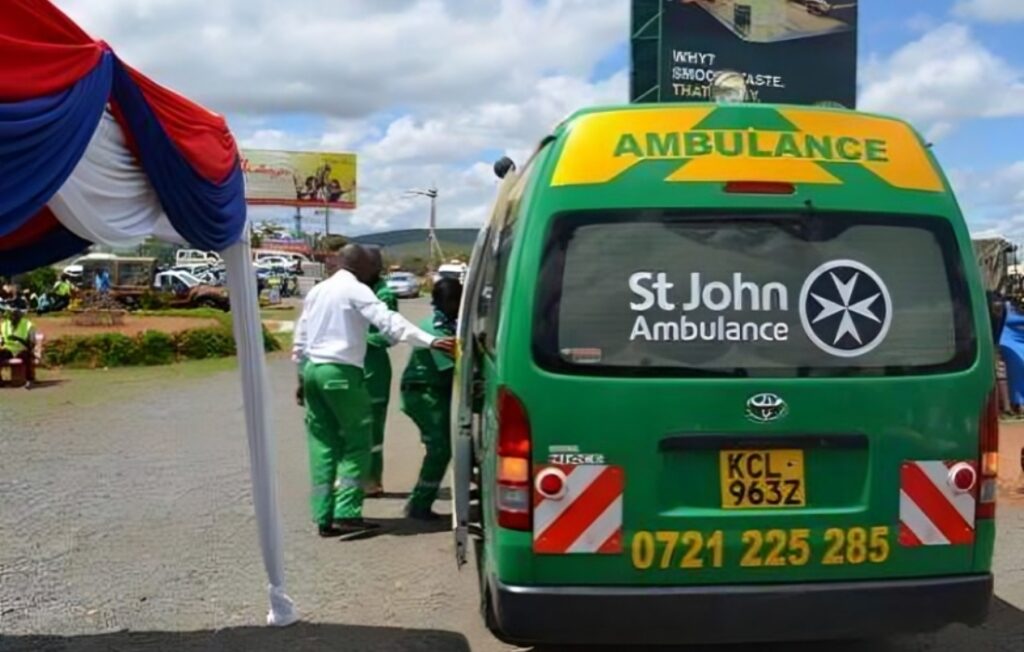
Kenya is set to launch its first-ever National Ambulance Dispatch Centre by the end of July.
Speaking during the 95th St. John Ambulance annual parade and inspection on Sunday, June 21, the Head of State announced the development saying that the dispatch centre is aimed at improving coordination, reducing response times and ensuring access to life-saving services across the country.
According to Ruto, the dispatch centre will be the second of its kind in Africa, positioning Kenya among a small group of countries with a nationally coordinated ambulance system.
“I am pleased to announce that Kenya will launch its first National Ambulance Dispatch Centre, becoming the second African country to establish a nationally coordinated ambulance system,” Ruto said.
Ruto also said that the centre, which will be launched by the end of July 2026, will be fully integrated into the country’s digital health infrastructure and powered by the Digital Health Agency.
It will use real-time coordination systems to enable faster ambulance deployment and improved communication between emergency responders and health facilities.
“The centre, which is scheduled to be launched by the end of July, will be integrated into our digital health infrastructure and powered by the Digital Health Agency, enabling faster coordination, real-time deployment and more efficient emergency response across the country,” he added.
Additionally, evacuation services will be provided free of charge to all Kenyans in need, a move expected to ease financial barriers during medical emergencies.
Once operational, the system is expected to coordinate approximately 100,000 emergency evacuations annually.
Furthermore, under the new plan, Kenyans experiencing an emergency will be able to call a central dispatch centre.
The nearest ambulance will then be sent to their location to transport the patient to the closest hospital.
According to the Head of the Republic, the first 24 hours of treatment, including admission, surgical procedures and other necessary interventions, will be fully funded by the Social Health Authority (SHA).