South African opposition leader Julius Malema has been sentenced to five years in prison after a court found him guilty of illegally possessing and discharging a firearm in public.
The ruling, delivered on Thursday, April 16, was met with immediate response from Malema’s legal team, who announced plans to appeal the decision.
They also indicated they would seek to prevent his arrest while the appeal is underway.
The leader of the Economic Freedom Fighters (EFF) had been convicted on multiple charges, including unlawful possession of a firearm and ammunition, firing a weapon in a public space, and reckless endangerment.
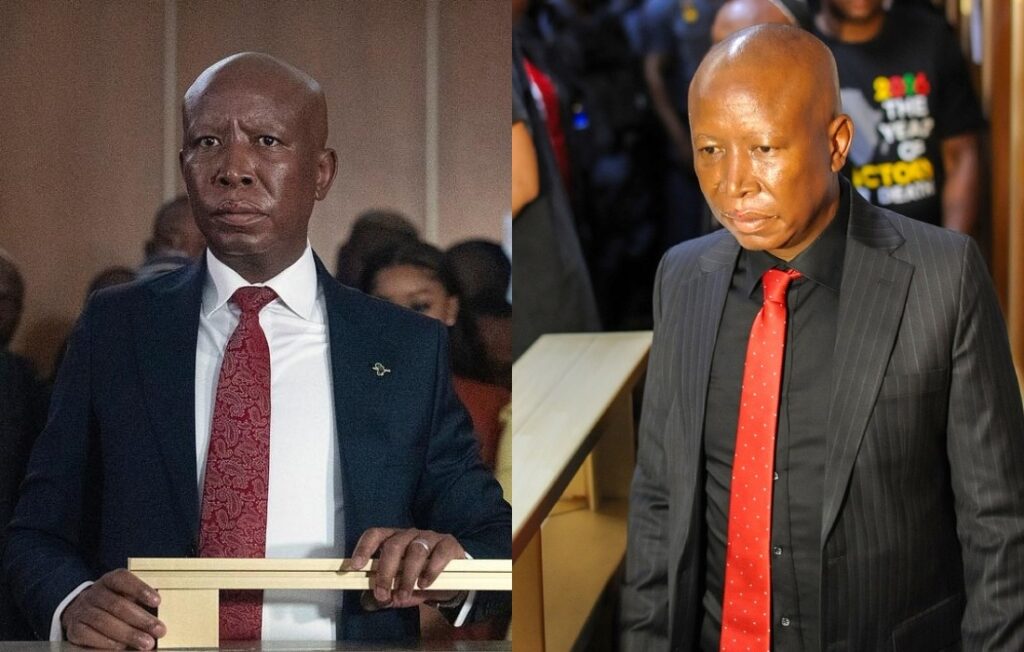
5-Year Sentence for Julius Malema Sends Shockwaves Through South African Politics. Photo: Courtesy.
The charges relate to a 2018 incident at the party’s fifth anniversary celebrations in the Eastern Cape.
Video evidence presented in court showed Malema firing several shots into the air with what was identified as a semi-automatic rifle.
In his defense, Malema maintained that the weapon was not his and said he discharged it in an attempt to energize the crowd at the event.
After being found guilty last October, Julius Malema said he was prepared to face the consequences and vowed not to back down.
He also committed to challenging the ruling through all available legal channels, including the Constitutional Court.
Malema’s co-accused and former bodyguard, Adriaan Snyman, was acquitted of two charges, including failing to take reasonable precautions to prevent harm and supplying a firearm to an unauthorized person.
Under the Constitution of South Africa, Julius Malema could lose his seat in the National Assembly if he is sentenced to more than 12 months in prison without the option of a fine and the conviction is upheld after appeals.
If the sentence stands, he would likely forfeit his role as an MP and its benefits.
However, this would not automatically remove him as leader of the Economic Freedom Fighters, since party leadership is determined internally.
Malema is expected to appeal both the conviction and sentence, which could lead to a reduction, suspension, or overturning of the ruling.
He may also seek bail pending appeal to remain free during the process.