
The construction of the Oloitokitok Agro-Processing Factory in Kajiado County has reached 70 percent completion as the Government moves to strengthen agricultural productivity and tackle persistent post-harvest losses in one of Kenya’s leading tomato-producing regions.
The facility, managed by the Ewaso Ng’iro South Development Authority (ENSDA), is being developed in the Rombo cluster, which is considered the country’s largest tomato-producing zone.
According to Interior Principal Secretary Raymond Omollo, construction of the factory began in 2020 but later stalled before the Government injected additional funding to revive the project.
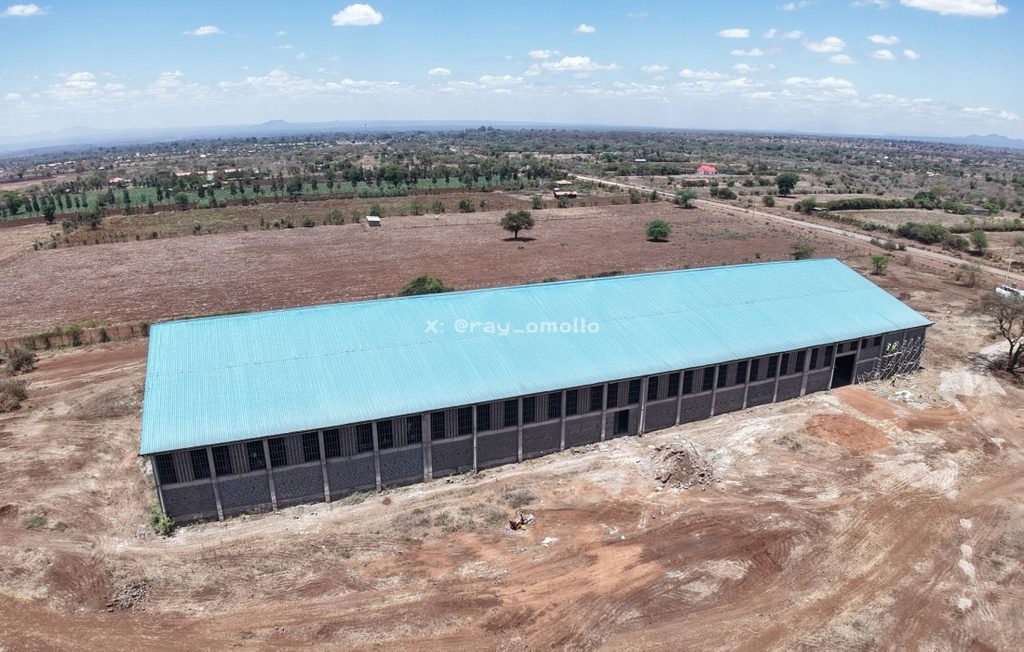
Oloitokitok Agro-Processing Factory in Kajiado. Photo: Courtesy.
Works have since resumed, with completion expected next year.
Once operational, the factory will initially process 24,000 metric tonnes of tomatoes annually, with its capacity eventually expected to increase to handle the region’s entire estimated annual production of 70,000 tonnes.
Farmers in the Rombo and Kimana areas currently produce approximately 50,000 tonnes of tomatoes each year.
However, about 40 percent of the produce is lost, largely due to limited processing and storage capacity.
The new facility is expected to reduce these losses by providing farmers with access to processing and cold-storage facilities while creating a reliable market for their produce.
The factory will produce bulk tomato puree and paste, allowing farmers to preserve the value of their produce beyond the fresh-produce market.
The additional market is also expected to help stabilise tomato prices and reduce farmers’ dependence on brokers.
At full operation, the facility is projected to create up to 200 direct jobs and approximately 3,000 indirect employment opportunities, providing an economic boost to communities in the surrounding areas.
Beyond tomatoes, the processing line will also handle mangoes, oranges and other fruits during off-seasons, enabling the facility to remain productive throughout the year while supporting a wider range of farmers.
The Government is also expanding the Rombo Clusters (Kisioki) Irrigation Development Project to ensure the factory has a steady supply of agricultural produce.
The gravity-fed canal system is expected to support more than 30,000 farmers involved in tomato and horticultural production, strengthening the agricultural value chain from production to processing and markets.
Omollo said the investments form part of efforts to raise agricultural productivity under the Agricultural Transformation pillar of the Bottom-Up Economic Transformation Agenda (BETA).
He further linked the agricultural investments to national security, noting that food security is a national security imperative.