

The High Court has dismissed a petition seeking a religious exemption to allow the use, possession and cultivation of cannabis for worship by members of the Rastafari faith.
In a judgment delivered on Wednesday, July 15, Justice Bahati Mwamuye threw out the amended petition filed by the Rastafari Society of Kenya and two other petitioners, who had challenged provisions of the Narcotic Drugs and Psychotropic Substances (Control) Act criminalising cannabis.
The petitioners argued that cannabis is a sacred sacrament central to their religious beliefs and sought permission to use, possess and cultivate the substance for private worship and within designated places of worship.
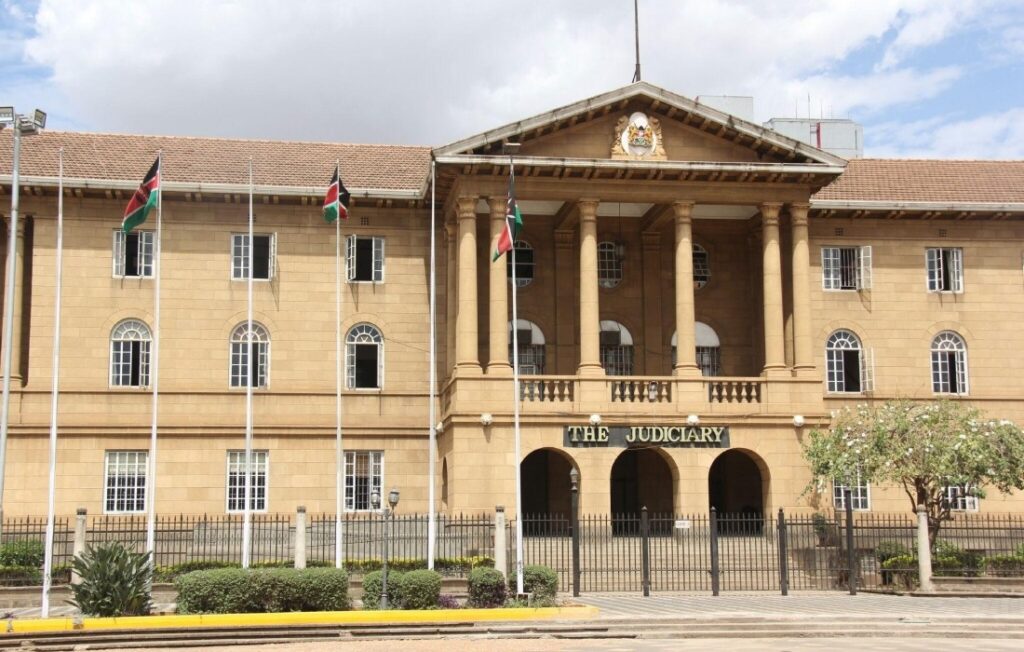
High Court of Kenya building. Photo: Courtesy.
However, the court found that the case had been filed prematurely because the petitioners had not first exhausted the licensing and exemption procedures provided for under the law before seeking constitutional intervention.
Justice Mwamuye held that the applicants had not demonstrated that they had formally applied for a licence or exemption under the Act or proved that the existing legal mechanisms were inadequate or incapable of addressing their concerns.
The court also recognised Rastafari as a religion protected under the Constitution but ruled that the evidence presented failed to establish that cannabis use is an indispensable requirement of the faith.
The judgment noted that testimony from some of the petitioners’ own witnesses indicated that Rastafari adherents can practise their religion without using cannabis.
Further, the judge ruled that the constitutional right to freedom of religion does not automatically exempt individuals from complying with laws of general application enacted to safeguard public health and safety.
The court found that the Narcotic Drugs and Psychotropic Substances (Control) Act applies equally to all citizens regardless of their religious beliefs and that the petitioners had not proved they had been subjected to discrimination or that their constitutional rights had been violated.
Justice Mwamuye also agreed with the State’s position that restrictions on cannabis are justified under Article 24 of the Constitution, citing concerns over public health, substance dependency, mental health risks and the possibility of cannabis being diverted into illegal markets.
Although the petition was dismissed, the judge observed that cannabis use has become increasingly widespread in Kenya and suggested that the country should engage in a broader national discussion on the issue through appropriate policy and legislative processes rather than through the courts.
The court ultimately dismissed the petition in its entirety, with each party directed to bear its own legal costs.