
The National Environment Management Authority (NEMA) has directed a review of the Extended Producer Responsibility (EPR) fee structure, saying the current framework does not comply with the Sustainable Waste Management (EPR) Regulations, 2024.
In a directive issued on Friday, June 26, NEMA Director General Mamo B. Mamo instructed the Kenya Producer Responsibility Organisation (KEPRO) to engage manufacturers, importers and other stakeholders across the value chain to develop a fee structure that aligns with the regulations.
The move follows concerns that the existing EPR fee framework has not effectively supported the implementation of the country’s waste management programme.
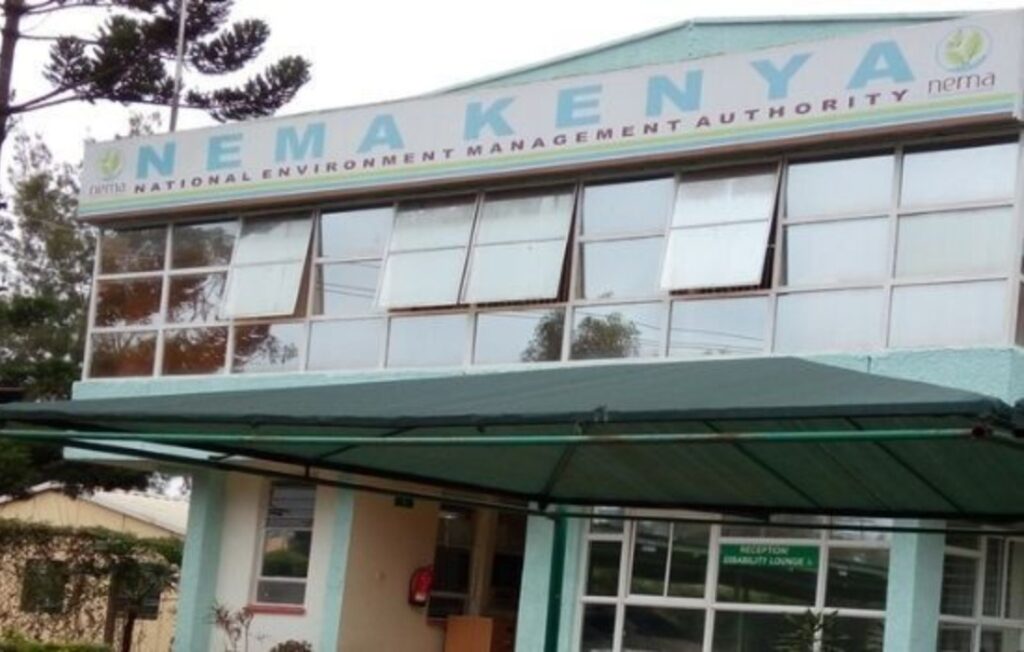
The National Environment Management Authority. Photo: Courtesy.
As part of the review, KEPRO has been directed to convene a validation workshop bringing together industry players to reassess the fees and build consensus on a revised structure that complies with the law.
The current framework imposes a standard import fee of Ksh150 per item across a broad range of product categories to finance waste management obligations.
The EPR fees are meant to fund the collection, transportation, recovery, recycling and environmentally sound disposal of post-consumer waste generated by products placed on the Kenyan market.
The charges cover packaging for non-hazardous products, including plastics, aluminium, composite materials, paper, corrugated packaging, glass, cardboard and cartons.
They also apply to packaging for hazardous products such as industrial chemicals, oils and lubricants, pharmaceuticals, agrochemicals, veterinary products, cosmetics, paints, solvents, treated wood and agricultural films.
In addition, the fee covers electrical and electronic equipment, including mercury auto switches, thermostats, batteries and accumulators, as well as end-of-life motor vehicles, aircraft and locomotives.
The framework further extends to non-packaging products such as plastics, glass, paper and cardboard items, furniture excluding wooden and metallic types, rubber and tyres, textiles, leather products, artificial hair, diapers and sanitary towels.

