
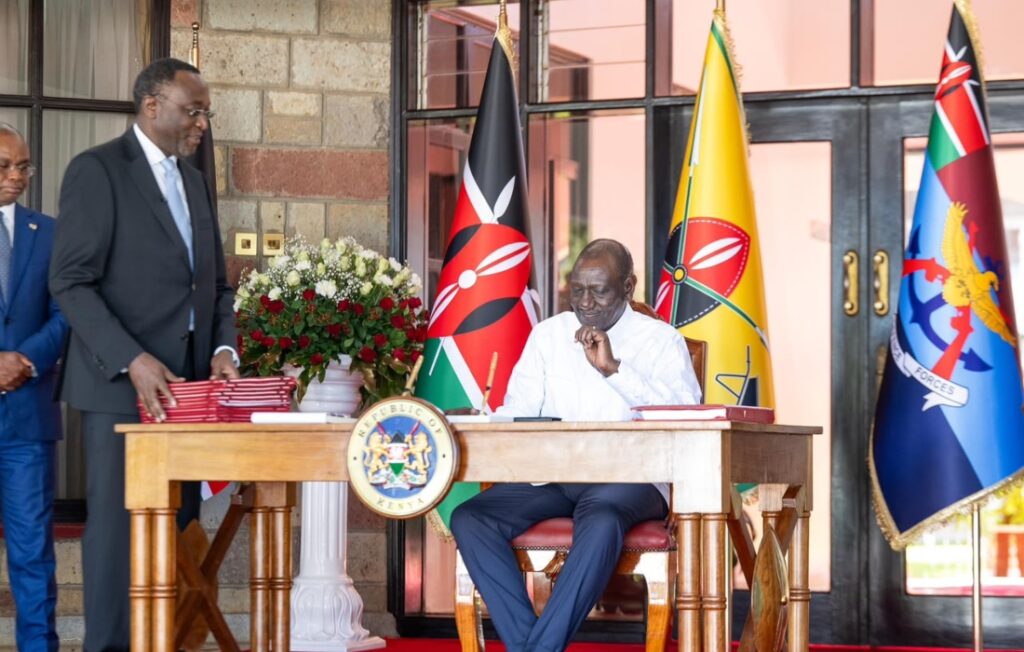
President William Ruto on Monday, October 19, assented to the County Governments Additional Allocation Bill 2026, paving the way for the transfer of additional resources to county governments.
The Head of State signed the legislation during a ceremony at Eldoret State Lodge in Uasin Gishu County.
Sponsored by Mandera Senator Ali Roba, the bill provides a framework for transferring conditional and unconditional allocations from the national government’s share of revenue, as well as loans and grants from development partners, to county revenue funds.
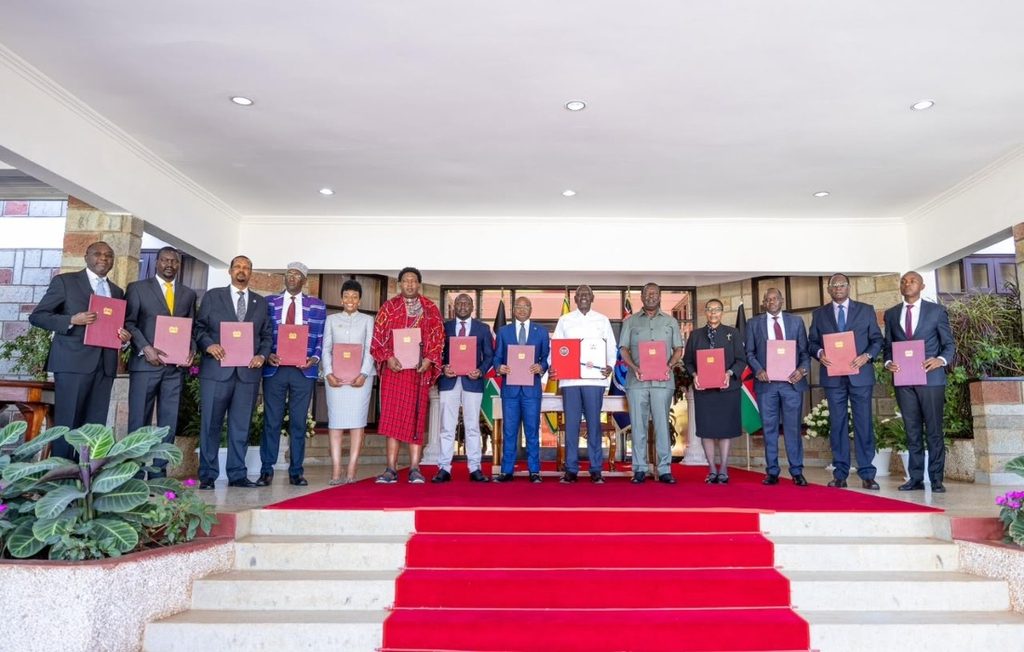
President William Ruto at the Eldoret State Lodge. Photo: Courtesy.
The legislation provides for the transfer of Ksh71,091,926,967 to county governments for the 2026/2027 financial year.
Senate Clerk Jeremiah Nyegenye explained that the additional funding would come from two main sources: the national government’s share of revenue and loans and grants from donors and development partners.
He noted that conditional allocations from the national government would support the construction of county headquarters and help meet the costs associated with transitioning county health workers to permanent and pensionable terms under the universal health coverage programme.
During the same ceremony, Ruto also assented to the County Assembly Services Amendment Bill.
According to Nyegenye, the legislation seeks to address governance challenges affecting county assembly civil services by establishing a formal process for removing members of county public service boards.
Under the new law, the removal process will involve a committee of inquiry, followed by a vote in the respective county assembly.
The latest approvals come days after Ruto signed the Tax Laws Amendment Bill 2026 into law.
Introduced in the National Assembly by Kikuyu MP Kimani Ichung’wah, the legislation amends Section 5 of the Value Added Tax Act to maintain a reduced VAT rate of eight per cent on petroleum products, down from 16 per cent.
National Assembly Clerk Samuel Njoroge explained that the reduced rate would remain in effect for 90 days, with the possibility of a further 90-day extension if the crisis in the Middle East persists.
The measure seeks to cushion the Kenyan economy against potential disruptions and rising costs associated with the conflict in the Middle East.