
U.S. President Donald Trump has nominated seasoned diplomat Henry Wooster to serve as the next United States Ambassador to Kenya, according to a list of diplomatic appointments submitted to the U.S. Senate.
The nomination, announced on Tuesday, June 2, is awaiting Senate confirmation before Wooster can officially take up the post in Nairobi.
A Career Member of the Senior Foreign Service with the rank of Minister-Counsellor, Wooster is among the most experienced diplomats in the U.S. foreign service.
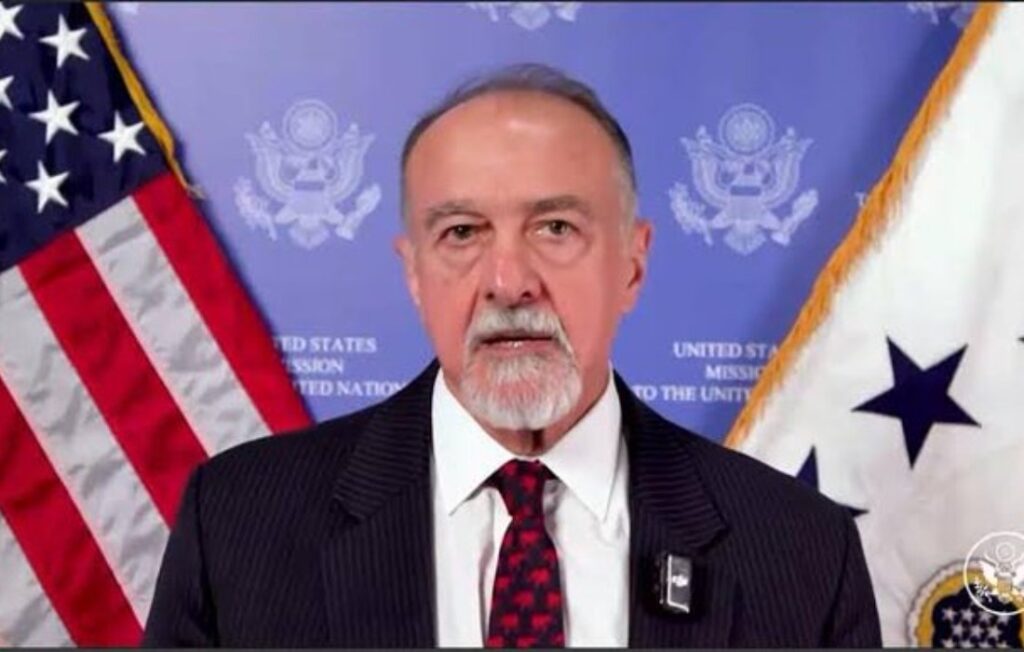
Henry Wooster set to become new U.S. envoy to Kenya pending senate approval. Photo: Courtesy.
If confirmed, he will become Washington’s chief representative in Kenya as the two countries continue to strengthen cooperation in areas such as security, trade, and regional stability.
Wooster brings more than 30 years of diplomatic and military experience to the role. Most recently, he served as the U.S.
Ambassador to Jordan from 2020 to 2023, working under both the Trump and Biden administrations.
Throughout his career, he has held several senior positions, including Deputy Assistant Secretary of State for the Maghreb and Egypt, where he helped shape U.S. policy in North Africa and the Middle East.
He also served as Director for Central Asia at the National Security Council and as Foreign Policy Advisor to the Commanding General of the U.S. Joint Special Operations Command.
His academic credentials include a Bachelor of Arts degree from Amherst College and a Master of Arts degree from Yale University.
If approved by the Senate, Wooster will succeed Meg Whitman, who completed her diplomatic assignment in Kenya in November 2024 shortly after Trump’s election as the 47th President of the United States.
Wooster’s nomination is part of a broader round of diplomatic appointments that also includes ambassadorial nominees for countries such as Egypt, Brazil, Colombia, Serbia, Sierra Leone, The Gambia, Equatorial Guinea, Indonesia, Azerbaijan, Cambodia, Paraguay and Ecuador.
The U.S. Senate is expected to review the nominations through its confirmation process, which typically involves committee hearings followed by a final vote.