
The historic Nyahururu Safari Train has officially resumed operations after 46 years, restoring passenger and freight rail services along the Thomson’s Falls rail corridor.
Kenya Railways announced on Monday, June 1, that the revived line now reconnects Nairobi, Gilgil, Ol Kalou, and Nyahururu, offering a scenic passenger service aimed at improving transport links and promoting domestic tourism.
The service is designed to combine affordability, comfort, and historical rail travel experience within the Aberdare region.
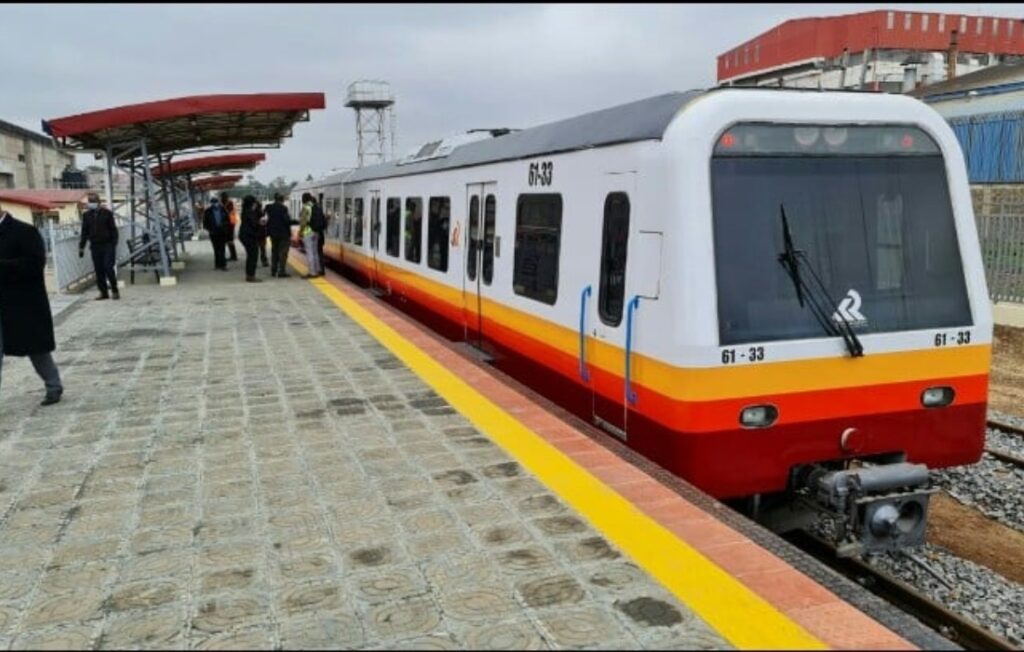
Nyahururu Safari Train Returns After 46 Years as Kenya Railways Restores Historic Rail Line. Photo: Courtesy.
Passengers can choose between First Class and Economy Class.
One-way fares from Nairobi to Nyahururu are set at KSh1,300 for First Class and KSh600 for Economy. Nairobi–Gilgil costs KSh960 and KSh450 respectively, while Nairobi–Ol Kalou is priced at KSh1,160 and KSh550. Short-distance fares include Gilgil–Ol Kalou at KSh200 and KSh100, Gilgil–Nyahururu at KSh350 and KSh150, and Ol Kalou–Nyahururu at KSh150 and KSh50.
The train operates twice weekly from Nairobi to Nyahururu on Tuesdays and Fridays, departing at 10:00 a.m. and arriving at 5:50 p.m. with scheduled stops in Gilgil and Ol Kalou.
Return journeys run on Wednesdays and Sundays, leaving Nyahururu at 10:00 a.m. and arriving in Nairobi at 5:50 p.m.
Alongside passenger services, freight operations on the Gilgil–Nyahururu branch have also been revived after nearly five decades.
The initial cargo movement involved the transportation of 396 tonnes of government-subsidized fertilizer from Athi River to National Cereals and Produce Board depots in Ol Kalou and Nyahururu using 11 Metre Gauge Railway wagons.
Kenya Railways noted growing interest from commercial players in using the line for logistics, including fertilizer, cement, dairy products, and freight services.
The corridor is also expected to support movement of construction materials, agricultural produce, livestock, and other goods.
The restoration is expected to strengthen regional logistics, enhance mobility, and contribute to economic activity while reintroducing both passenger and cargo rail services to communities along the route.

