
President William Ruto has moved to justify the high cost of fuel in Kenya, as the country continues to record some of the steepest pump prices in the East African region.
Prior to the government’s recent move to reduce Value Added Tax (VAT) on petroleum products, the Energy and Petroleum Regulatory Authority (EPRA) had, on April 14, implemented a significant price review, increasing fuel costs by up to 24.2 percent.
Following the adjustment, the price of petrol rose by 16.1 percent to Ksh206.97 per litre, while diesel registered the sharpest increase at 24.2 percent, bringing its retail price to Ksh206.84 per litre.
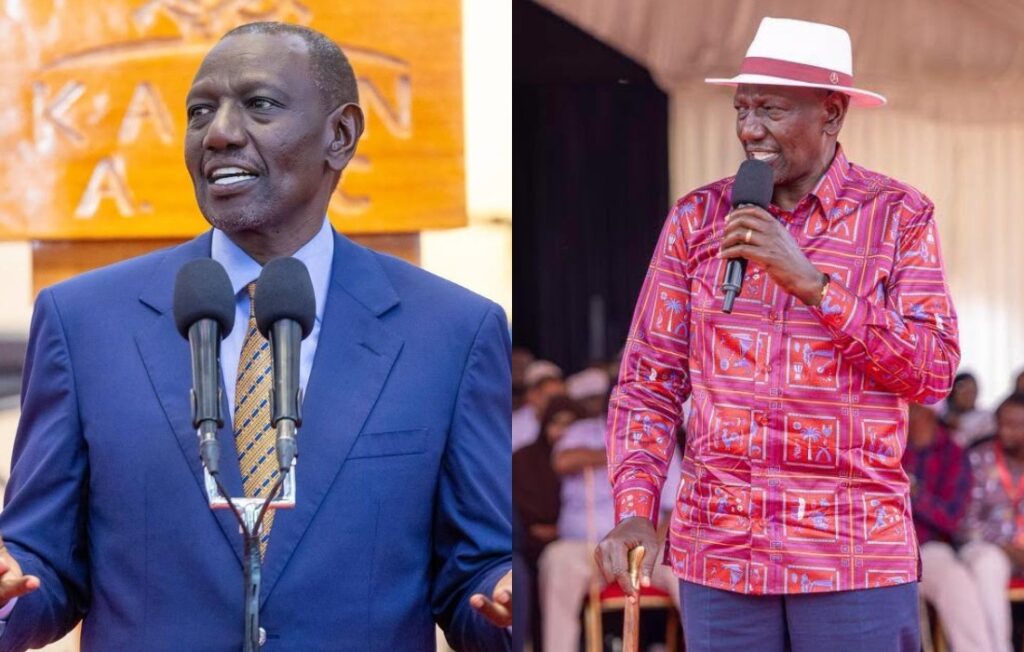
Ruto explains why Kenyans pay more for fuel than their East African neighbors. Photo: Courtesy.
Kerosene prices remained unchanged at Ksh152.78 per litre.
These increases pushed Kenya to the top of the region’s fuel price rankings. Rwanda followed closely, with petrol in Kigali retailing at just above Ksh203 per litre and diesel at approximately Ksh195.
Meanwhile, fuel prices in Tanzania and Uganda remained comparatively lower. In Tanzania, both petrol and diesel averaged around Ksh189 per litre, while in Uganda, petrol retailed at about Ksh185 and diesel at roughly Ksh174.
Speaking at the Africa Gospel Church Karen in Nairobi on Sunday, April 19, Ruto defended Kenya’s high fuel prices, arguing that comparisons should be made with countries of similar economic standing rather than regional neighbours.
The president emphasized that Kenya is classified as a middle-income economy, unlike many of its East African counterparts, which are considered least developed.
As such, he noted that benchmarking fuel prices against those countries presents an inaccurate picture.
Ruto further attributed the higher fuel costs to the government’s substantial investment in road infrastructure, which relies heavily on fuel-related levies for funding.
He explained that a portion of the fuel pricing structure is directed towards financing road construction and maintenance, an approach he suggested is less pronounced in other countries within the region.
The president also pointed out that Kenya has developed a significantly larger network of tarmac roads compared to its East African neighbours, underscoring the scale of infrastructure supported by such funding mechanisms.
The president maintained that higher fuel prices in Kenya are inevitable, largely due to the country’s extensive investment in road infrastructure.
Speaking further, William Ruto highlighted Kenya’s vast tarmac road network, noting that it surpasses that of its East African peers and is set to expand significantly in the coming years.
Beyond infrastructure, he attributed the rising fuel costs to external factors, particularly instability in the Middle East, where Kenya sources most of its petroleum.
Ruto pointed to ongoing tensions involving the United States, Israel, and Iran, saying the conflict has disrupted global fuel supply and contributed to elevated prices.