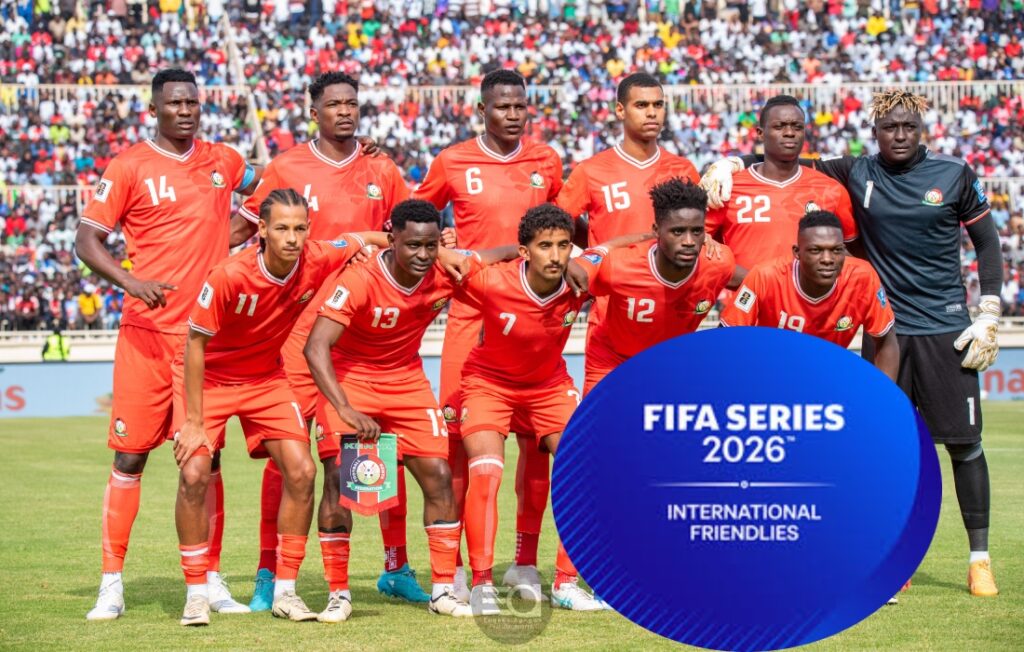
FIFA Series 2026 is shaping up to be one of the most ambitious international football projects in recent years. The expanded edition will feature 48 national teams from all six FIFA confederations, representing almost a quarter of the global football community.
The tournament will be played during the March and April international match window. It will consist of 12 groups of four teams each, creating a structured but wide ranging competitive platform for men’s and women’s national teams.
Harambee Stars will take part in the Rwanda-hosted leg of the competition. Kenya has been drawn in a group alongside Rwanda, Estonia and Grenada, a mix that brings together African, European and Caribbean football styles.
For Kenya, this group offers more than just friendly fixtures. It presents a chance to test tactical discipline, squad depth and adaptability against unfamiliar opponents in a competitive but developmental environment.
Other groups involved in the FIFA series
FIFA confirmed the full list of hosts and group compositions following the announcement of the expanded format in November 2025. Eleven FIFA Member Associations will host matches, with Rwanda hosting two separate groups to bring the total to 12.
The FIFA Series 2026 will include nine men’s groups and three women’s groups. All six confederations will be represented, reinforcing the truly global nature of the initiative and its aim to encourage cross confederation competition.
On the men’s side, matches will be hosted by Australia, Azerbaijan, Indonesia, Kazakhstan, New Zealand, Puerto Rico, Rwanda and Uzbekistan. These venues will welcome teams with very different footballing backgrounds and competitive histories.
The range of participating teams reflects the development focused design of the Series. Rankings stretch from established nations such as Australia to emerging football countries like the US Virgin Islands, ensuring meaningful matchups for teams at every stage of growth.
Five men’s teams in the FIFA Series 2026 Australia, Cabo Verde, Curaçao, New Zealand and Uzbekistan have already qualified for the FIFA World Cup 2026. Their inclusion highlights the competitive relevance of the tournament alongside its broader development goals.
The women’s competition will take place in Brazil, Côte d’Ivoire and Thailand. Teams such as Brazil, Canada and Korea Republic will compete alongside developing sides including Pakistan, Mauritania and Turks and Caicos Islands.
This structure provides valuable exposure for women’s national teams that rarely play outside their regions. It also supports FIFA’s wider objective of growing the women’s game through regular and meaningful international competition.
A key strength of the FIFA Series lies beyond the pitch. Host and participating associations gain practical experience in event management, referee development and competition organisation under conditions similar to major international tournaments.
These operational benefits help strengthen football structures at national level. For developing nations, the knowledge gained can have long term impact across leagues, youth systems and governance.
All FIFA Series 2026 matches will be broadcast globally. This ensures increased visibility for participating teams and improved access for fans across different regions.
For Kenya, global broadcast coverage offers a platform to showcase talent and progress to an international audience. It also allows supporters to follow the Harambee Stars as they face new opponents on a broader stage.
As preparations continue, the focus for Harambee Stars will be on using the Rwanda group to build cohesion and confidence. In a tournament designed to blend competition with growth, Kenya’s participation signals another step forward in its international journey.