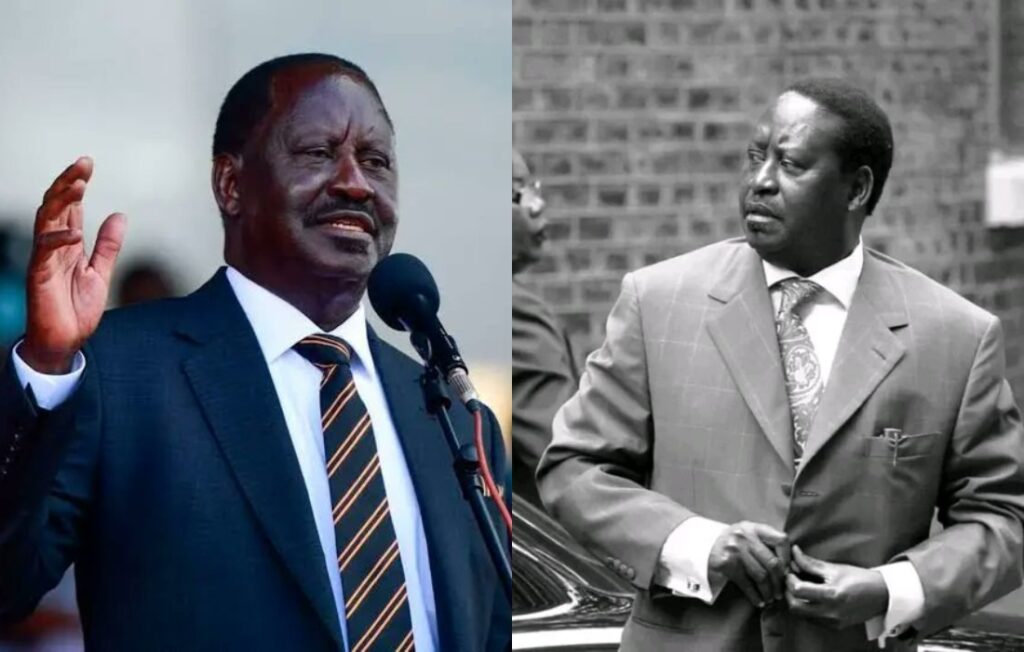
For several decades, Raila Odinga remained a defining figure in Kenya’s political landscape, his determination and persistence leaving a lasting mark on the country’s democratic evolution.
From his early days as a vocal advocate for multiparty democracy during the one-party era to his influential role as a national statesman, Raila’s political journey has been characterized by resilience and conviction.
Born on January 7, 1945, in Maseno, Kisumu County, Raila is the son of Kenya’s first Vice President, Jaramogi Oginga Odinga.
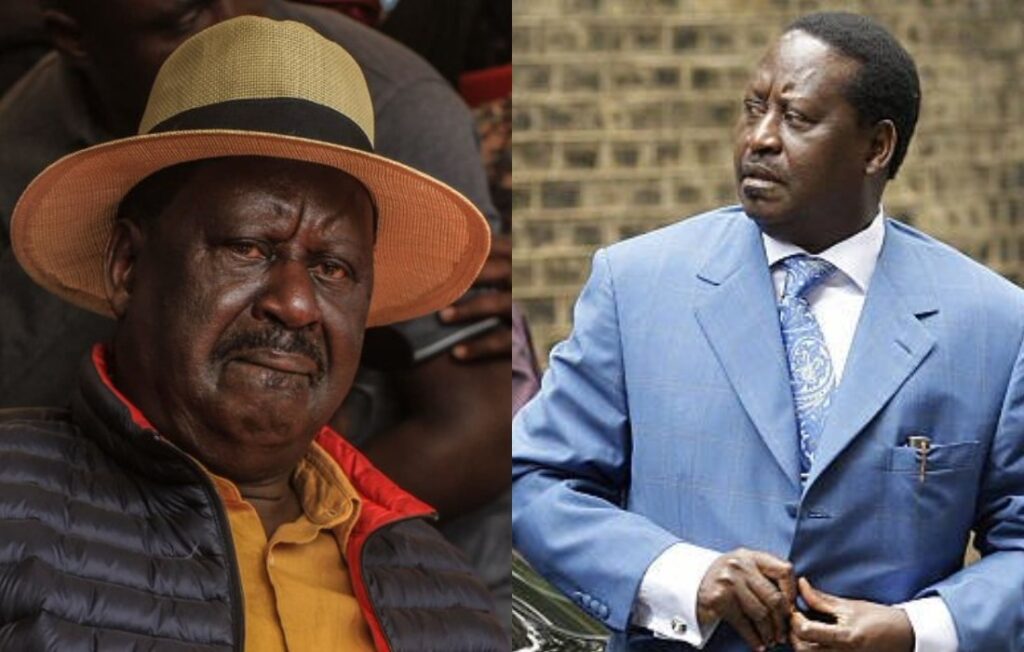
Raila Odinga’s Lifelong Battle for Change and Justice. Photo: Courtesy.
Despite his prominent background, his own path in politics was far from easy, marked by years of struggle, imprisonment, and unwavering pursuit of reform.
At 48, Raila Odinga was arrested during President Daniel arap Moi’s regime and detained under security laws that allowed the government to hold individuals indefinitely without charge or trial if deemed a threat to state security.
His time in detention deepened his resolve to fight for democracy and political freedom in Kenya.
Odinga’s Political Journey
The year 2002 marked a turning point in Raila Odinga’s political career.
After parting ways with KANU, Raila joined the Liberal Democratic Party (LDP) and formed an alliance with Mwai Kibaki’s National Alliance of Kenya (NAK) to create the National Rainbow Coalition (NARC).
His famous declaration, “Kibaki Tosha” became a defining moment in the campaign that ended KANU’s four-decade rule.
Following NARC’s victory, Raila was appointed Minister for Roads, Public Works, and Housing, but relations between him and President Kibaki soon soured over unfulfilled coalition agreements.
The fallout deepened after the 2005 constitutional referendum, where Raila led the ‘No’ campaign, symbolized by the orange, a symbol that later evolved into the Orange Democratic Movement (ODM).
In the 2007 general election, the late Raila contested the presidency under ODM.
The disputed results, which declared Mwai Kibaki the winner, sparked widespread post-election violence, leading to over 1,000 deaths and displacements across the country.
A power-sharing deal brokered by international mediators resulted in a grand coalition government, with Raila serving as Kenya’s second Prime Minister from 2008 to 2013.
Raila made another presidential bid in 2013 under the Coalition for Reforms and Democracy (CORD) but lost to Uhuru Kenyatta.
He challenged the results in court, but the Supreme Court upheld Kenyatta’s win.
In 2017, Raila ran again under the National Super Alliance (NASA).
The Supreme Court annulled the election results citing irregularities, a first in Africa and ordered a repeat poll, which Raila boycotted after his demands for reforms were not met.
In 2018, Raila surprised many when he shook hands with President Uhuru Kenyatta, in what became known as “The Handshake.”
The truce eased political tensions and paved the way for the Building Bridges Initiative (BBI), a constitutional reform effort that was later declared unconstitutional by the courts.
In 2022,he made his fifth attempt at the presidency under the Azimio la Umoja–One Kenya Coalition, supported by Uhuru Kenyatta.
He narrowly lost to William Ruto, marking yet another close but unsuccessful bid for State House.
Despite the loss, Raila Odinga continued to be a dominant voice in Kenyan politics, advocating for governance reforms and regional leadership.
In February 2025, he contested for the African Union Commission (AUC) Chairperson position but lost to Djibouti’s Mahmoud Ali Youssouf, further cementing his image as a steadfast and respected continental statesman.